Most SEO plans fail for a simple reason. They start with keywords instead of the business.
In this post, I’ll show how we build an SEO roadmap from the first client call to the first round of results. I’ll also explain what changed once AI search entered the picture. Along the way, I’ll share one audit that surprised me and the mistakes I see most often.
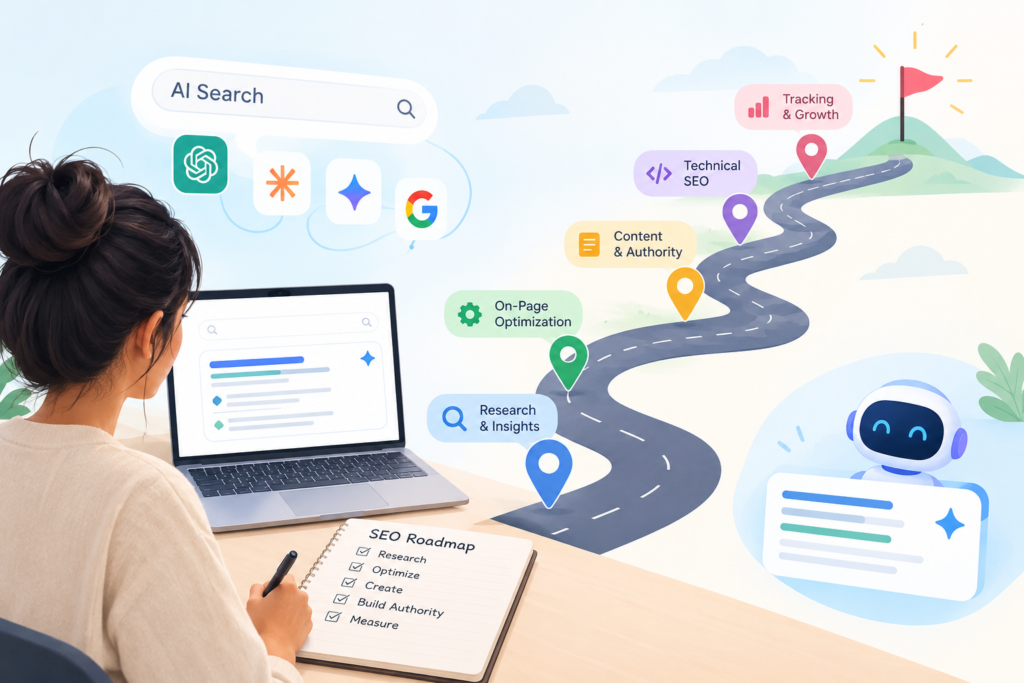
Image placement 1 (after intro): Roadmap flow graphic
- Prompt: “Clean flat-style horizontal flowchart showing five stages of an SEO roadmap: business goals, audit, priorities, question-based content, measurement. Soft blue and white palette, no text clutter.”
- Alternative text: “Five-stage flowchart showing how we build an SEO roadmap”
How We Build an SEO Roadmap, Step by Step
Our process has four stages. Each one feeds the next, so skipping ahead usually costs time later.
Step 1: Start With the Business, Not the Keywords
Before I open any tool, I learn how the client makes money. I ask about:
- Their products or services
- Their target audience
- Their main competitors
- What they want SEO to achieve
How We Build an SEO Roadmap for the AI Search Era,That last question matters most. A business that wants more leads needs a different plan than one that wants brand awareness. Without a clear goal, you can’t judge whether the roadmap is working.
Step 2: Audit the Site and the Traffic
Next, I run an initial website and SEO audit. It covers current performance, technical issues, keyword targeting, and content gaps.
How We Build an SEO Roadmap for the AI Search Era,Here is a real example. I once audited a local business website that looked great. The design was clean and the pages were easy to navigate.
The audit told a different story:
- Several important service pages were poorly optimized.
- Page speed was slow.
- Meta information was missing.
- Keyword targeting was weak.
The surprising part was that the site was already getting traffic. It just wasn’t getting the right traffic. The pages ranked, and people visited, but the search terms didn’t match what the business actually sold.
So we didn’t chase more visitors. We fixed the technical problems first. Then we optimized the key pages around relevant, high-intent keywords.
Lesson: More traffic is not the goal. Relevant traffic is.
Step 3: Turn Findings Into Clear Priorities
How We Build an SEO Roadmap for the AI Search Era,An audit can produce a hundred to-dos. A roadmap puts them in order. This is how we usually phase the work:
| Phase | Focus | Typical output |
| 1. Foundation | Technical fixes, missing metadata, page speed | A clean, crawlable site |
| 2. Core pages | Service and product pages matched to search intent | Pages that attract the right visitors |
| 3. Content | Question-based articles and supporting pages | Answers customers actually look for |
| 4. Measurement | Rankings, clicks, impressions, AI mentions | A clear view of what’s working |
The order isn’t rigid. A site with no technical issues can move straight to content. Your own audit should decide the sequence.
AI Search Changed Our SEO Roadmap
AI search didn’t replace our fundamentals. We still do technical SEO, keyword research, and quality content. What changed is how we think about visibility.
People now ask full questions in Google’s AI features and tools like ChatGPT. They don’t type short keywords as often. How So the goal has widened from ranking on Google to making the brand visible across the whole search journey.
The Specific Change We Made
We moved part of our content strategy away from keyword-first articles. Instead, we built content around the real questions customers ask.
For a service page, that meant:
- Listing the common questions customers ask about the service
- Giving each question a clear, direct answer
- Adding supporting detail beneath the answer
- Strengthening internal links between related pages
This helps readers first. It also gives AI systems clear information they can understand and potentially reference. Google’s own guidance on AI features and your website says the same basic SEO best practices still apply.
Image placement 2 (this section): Before-and-after content structure
- Prompt: “Simple split-screen illustration: left side shows a page built around one keyword, right side shows a page built around customer questions with short answers. Minimal, modern style.”
- Alt text: “Keyword-focused page compared with a question-based page in our SEO roadmap”
What Happened Next
I’ll be honest here. AI visibility did not improve overnight, and I wouldn’t promise that to any client.
What we did gain was a broader way to measure success. We watched organic impressions, clicks, and rankings for question-based searches. We also started manually checking relevant prompts in AI tools. We wanted to see whether the brand was mentioned or linked to those topics.
Manual checks are imperfect, and AI answers vary from one run to the next. Treat them as a directional signal, not a precise score.
How We Measure an SEO Roadmap Now
How We Build an SEO Roadmap for the AI Search Era,Our scorecard grew, but nothing on the old one was thrown out.
| Metric | Traditional SEO | AI search era |
| Rankings | Core measure | Still tracked |
| Organic clicks and impressions | Core measure | Still tracked, with question-based queries filtered out |
| Brand mentions | Rarely tracked | Tracked regularly |
| AI recommendations | Not applicable | Manual prompt checks |
| Lead quality | Sometimes tracked | Reviewed against business goals |
You can start with Google Search Console’s performance report. Filter queries that begin with “how,” “what,” or “why” to see your question-based traffic.
Common Mistakes in SEO Content Planning
How We Build an SEO Roadmap for the AI Search Era,The most common mistake I see is creating content just to hit keywords. Businesses publish plenty of articles, but no clear search intent sits behind them.
Watch for these patterns:
- Publishing without a purpose. Every article should serve a reader and a business goal.
- Chasing traffic alone. Visitors who never become leads or customers don’t help much.
- Ignoring intent. If the page doesn’t answer the question behind the search, it won’t hold rankings for long.
Good content satisfies the reader first. Then it targets the right keyword naturally. Google’s guidance on creating helpful, people-first content supports this approach.
The One Thing to Do This Week
You don’t need a full roadmap by Friday. Do this instead:
- Run a quick SEO audit of your website.
- Pick the one page with the highest potential to bring relevant traffic or leads.
- Check that it matches the search intent.
- Confirm it targets the right keyword.
- Make sure the content is useful and original.
- Add a clear call to action.
One focused improvement beats a dozen half-finished fixes. If you want a deeper starting point, see our guide to running a basic SEO audit (internal link).
FAQs
How long does it take to build an SEO roadmap?
How We Build an SEO Roadmap for the AI Search Era,It depends on the size of the site. The business discovery and audit usually come first, and the roadmap follows once priorities are clear.
Do I need a different SEO roadmap for AI search?
How We Build an SEO Roadmap for the AI Search Era,Not a separate one. Keep your technical SEO, keyword research, and quality content. Add question-based content and ways to track brand visibility in AI tools.
How do I know if AI tools mention my brand?
How We Build an SEO Roadmap for the AI Search Era,Manually test relevant prompts in tools like ChatGPT and Google’s AI features. Track brand mentions over time. Results change often, so look for patterns rather than single answers.
What should I fix first?
How We Build an SEO Roadmap for the AI Search Era,Fix technical problems that block your key pages, such as slow speed and missing metadata. Then improve the page with the most potential to bring in leads.
Conclusion
How We Build an SEO Roadmap for the AI Search Era,That’s how we build an SEO roadmap: understand the business, audit honestly, prioritize clearly, and answer real customer questions. AI search added new ways to measure visibility, but it didn’t replace the basics.
Start small this week. Pick one high